The story of Hill Farm
Thousands of years of people working, crossing and caring for land in the Fynn Valley
People have lived from this land for thousands of years: flint workers, travellers at the ford, medieval ploughmen, Victorian breeders of Suffolk horses and Red Poll cattle, and the farm workers of the twentieth century.
Each generation farmed the valley in the way its times demanded and left traces in the soil, on the maps and in the parish records. Some changes enriched the land and some wore it down. Hill Farm is the latest chapter: a farm run for food, wildlife and people together, which measures its own effects so that the next chapter can be better still.
With thanks to Brian Seward
Much of this story comes from the work of the late Brian Seward, Playford’s village recorder and historian for many years, who died in 2023. Over several years he wrote a detailed history of each of the village’s older houses, including a 74-page study of Hill House and the families who farmed from it. His monographs are published by Playford Parish Council on its village history page, where you can read Hill House and the rest of the series in full.
We have retold the farming and land parts of his work in our own words, and reproduced some of the historic photographs he gathered, with the credits he gave them. Any mistakes in our summary are ours.
Explore the maps
Switch between Ordnance Survey maps from 1881, about 1904 and the 1950s, and slide the old map away to compare it with today. Look for the hedges that have gone, the railway cutting across the valley and the names of fields and woods. The dots mark places that appear in the story.
Ordnance Survey six-inch map, first edition (surveyed about 1881) Ordnance Survey six-inch, Suffolk. Courtesy of the National Library of Scotland (CC-BY)

Timeline
-
Stone Age before 2500 BC
-
Thousands of years ago
First traces: flint tools
The oldest things found on Hill Farm are worked flints: tools shaped by hunters, gatherers and early farmers who used this valley long before anyone wrote about it. The light soils of the valley sides were easy to work, and the River Fynn, which would probably have been tidal here, brought water, fish and game. Elsewhere in the parish a Mesolithic axe was found on Playford Heath and a polished Neolithic axe has also been recorded, both in the Suffolk Historic Environment Record.
Photographs and descriptions of the flint tools found on the farm will be added here.
-
-
Roman and Saxon AD 43 to 1066
-
Roman Britain
Roman pottery by the railway
When the railway cutting was dug across the south side of the valley in the 1850s, the workmen turned up fragments of Roman urns. The Ordnance Survey marked the spot on its first detailed map: look for Fragments of Roman Urns found A.D. 1858 beside the line on the 1881 map.
-
About AD 900 to 1000
A Saxon seax near the old ford
In 1883 Manfred Biddell, Arthur Biddell’s eldest son, gave the British Museum an Anglo-Saxon seax: a long, single-edged iron knife-sword, about 75 to 80 cm long, with a decorated back. It came from the river silts of the valley near the old ford, just over today’s parish boundary. The name Playford itself is usually explained as Old English for the ford where games were held. Crossing the Fynn has mattered here for more than a thousand years, which is why our new cattle ford (see 2023) feels like part of a long story.
-
1086
Playford in Domesday Book
When William the Conqueror’s commissioners recorded Playford in 1086, the manor was held from Robert Malet, one of the greatest Norman landholders in Suffolk. The entry reads like a farm inventory: plough teams, 20 acres of meadow, woodland enough to feed 20 pigs, a mill, cattle, pigs, sheep, beehives and a church. Meadow, grazing, woodland and bees are all still part of Hill Farm today.
-
-
Tudor and Stuart 1485 to 1714
-
1500s to 1719
The Feltons of Playford Hall
Early in the 1500s the manor passed by marriage to the Felton family, who built the moated Playford Hall across the river in about 1590. For two centuries Playford was a family estate run from the Hall, its land worked by tenants and labourers on the arable fields, the river meadows and the heath.
-
From the 1500s
Coins and musket balls
Coins from Tudor times onwards have been found on the farm, small losses from people working, trading and travelling across these fields. So have lead musket balls of the 1600s. One idea is that they were dropped by Parliamentarian soldiers quartered at Playford Hall during the Civil War of the 1640s. Suffolk was firmly on Parliament’s side, and in January 1643 Parliament’s commissioner William Dowsing came to Playford church and broke down 17 ‘popish’ pictures. We have not yet found a written record of troops at the Hall, though. If you know of one, please tell us.
Photographs of the coins and musket balls, with what each one is, will be added here.
-
-
Estate and enclosure 1719 to 1807
-
1719
A tenanted estate
When the last Felton died childless in 1719, Playford passed to his niece and her husband John Hervey, 1st Earl of Bristol, of Ickworth near Bury St Edmunds. The Herveys, later Marquesses of Bristol, owned almost the whole parish until 1951, and with no lord living at the Hall its land was let as tenanted farms. A survey of about 1770 shows how arable the parish already was: 432 of the 500 acres of neighbouring Lux Farm were ploughland, and many fields were still called walks, after the sheepwalks on the heath that farmers had recently broken up.
-
-
The Biddells 1808 to 1892
-
1808
Arthur Biddell takes Hill Farm
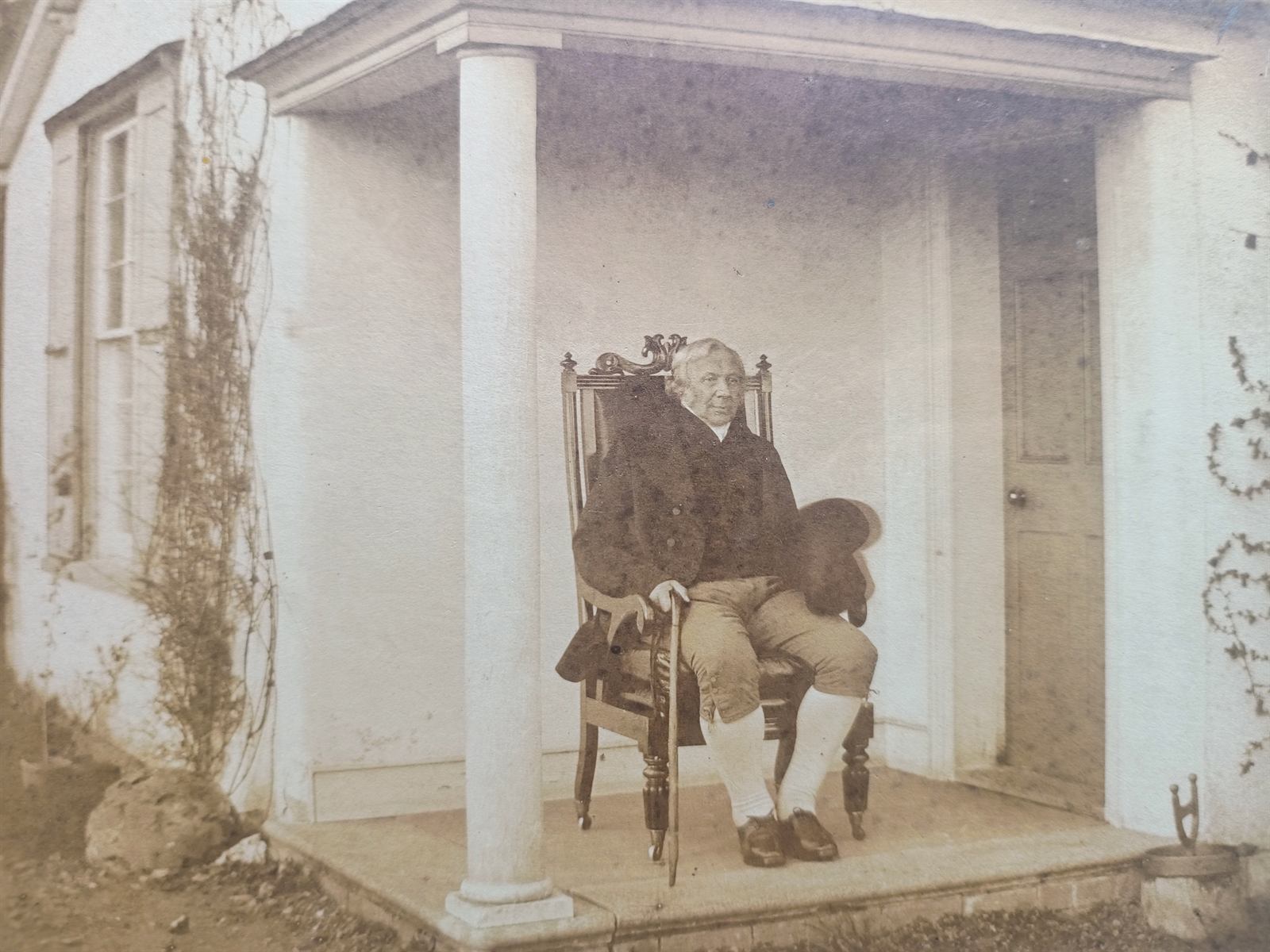
In 1808 Arthur Biddell, a 25-year-old farmer from West Suffolk, took the tenancy of Hill Farm; a lease of 1810 gives it as 221 acres at £265 a year. He went on to farm neighbouring Lux and Kiln Farms as well, served the parish for decades as churchwarden, surveyor of highways and overseer of the poor, and became a respected land and tithe valuer. His day books, wage books and work books, now in Suffolk Archives, are among the best records anywhere of how Suffolk was farmed in the early 1800s.
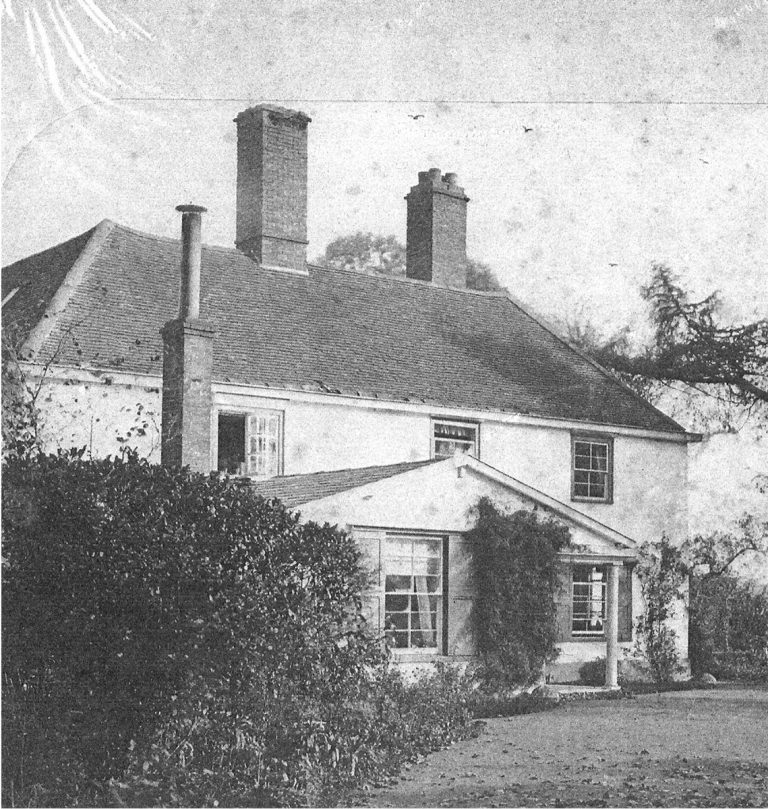
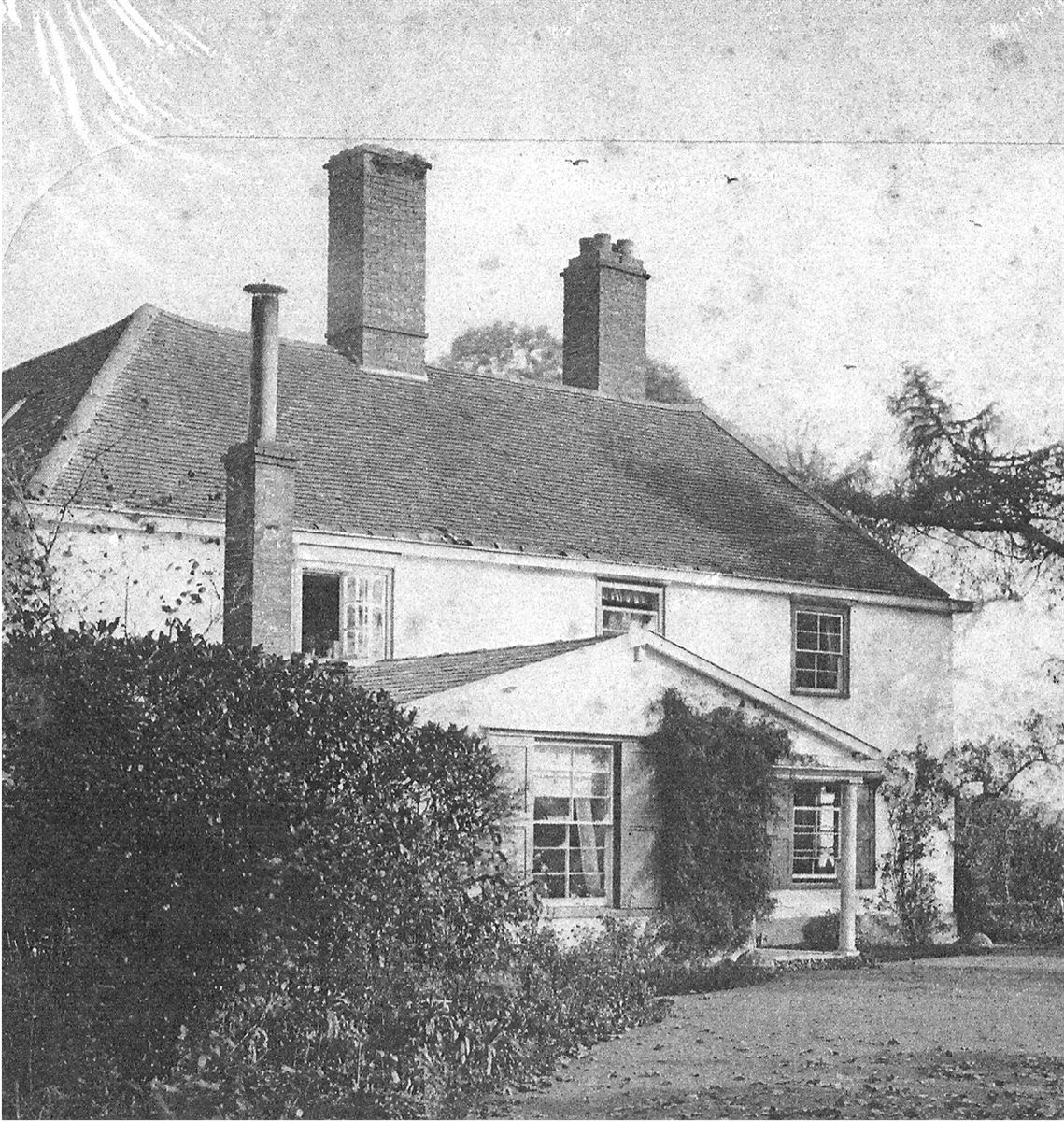
Hill House in 1859. Its red-brick front was added about 1900. Biddell collection 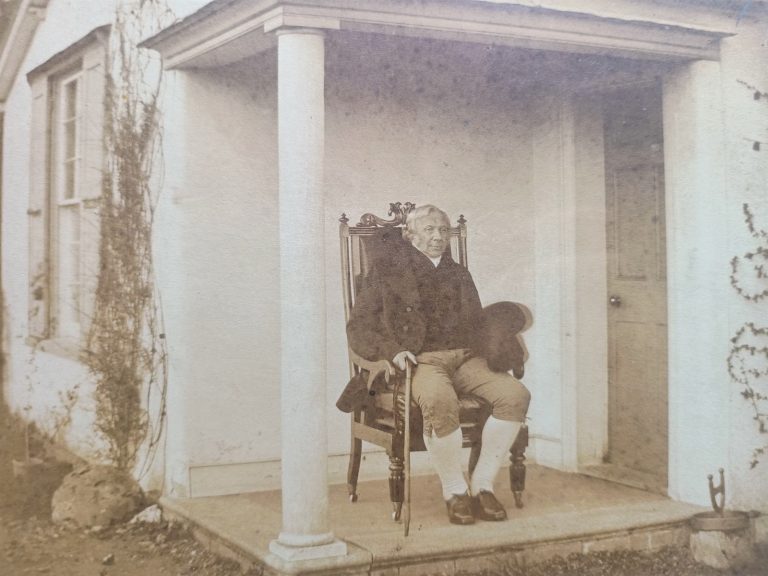
Arthur Biddell in the porch of Hill House, 1859. Biddell collection 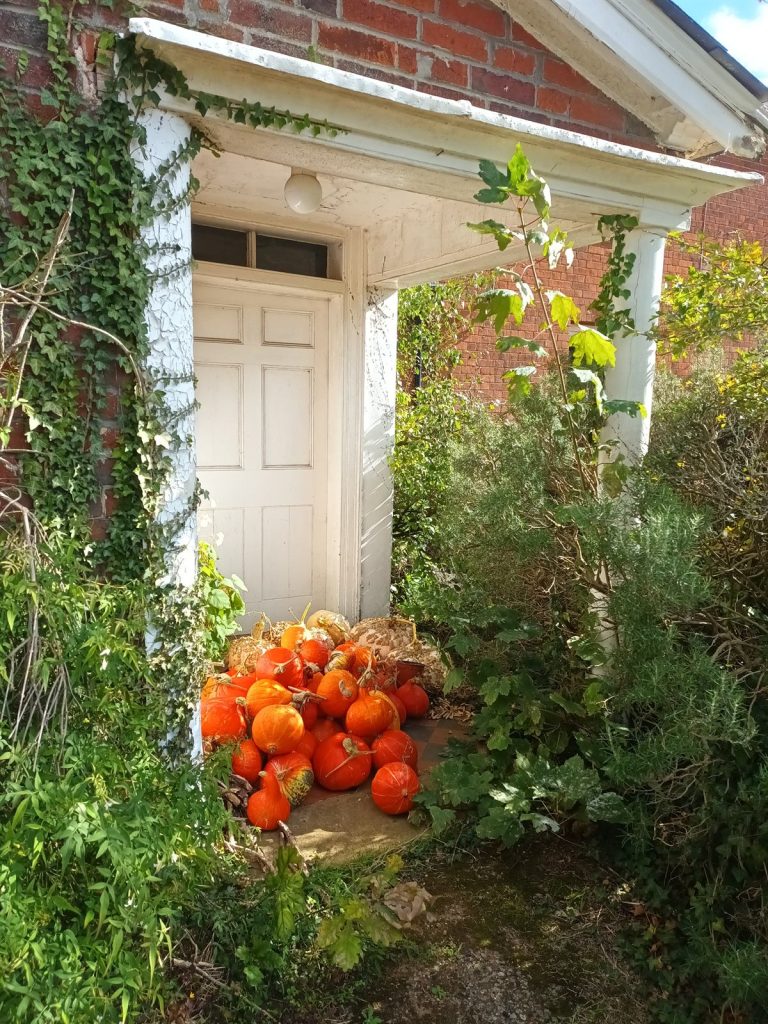
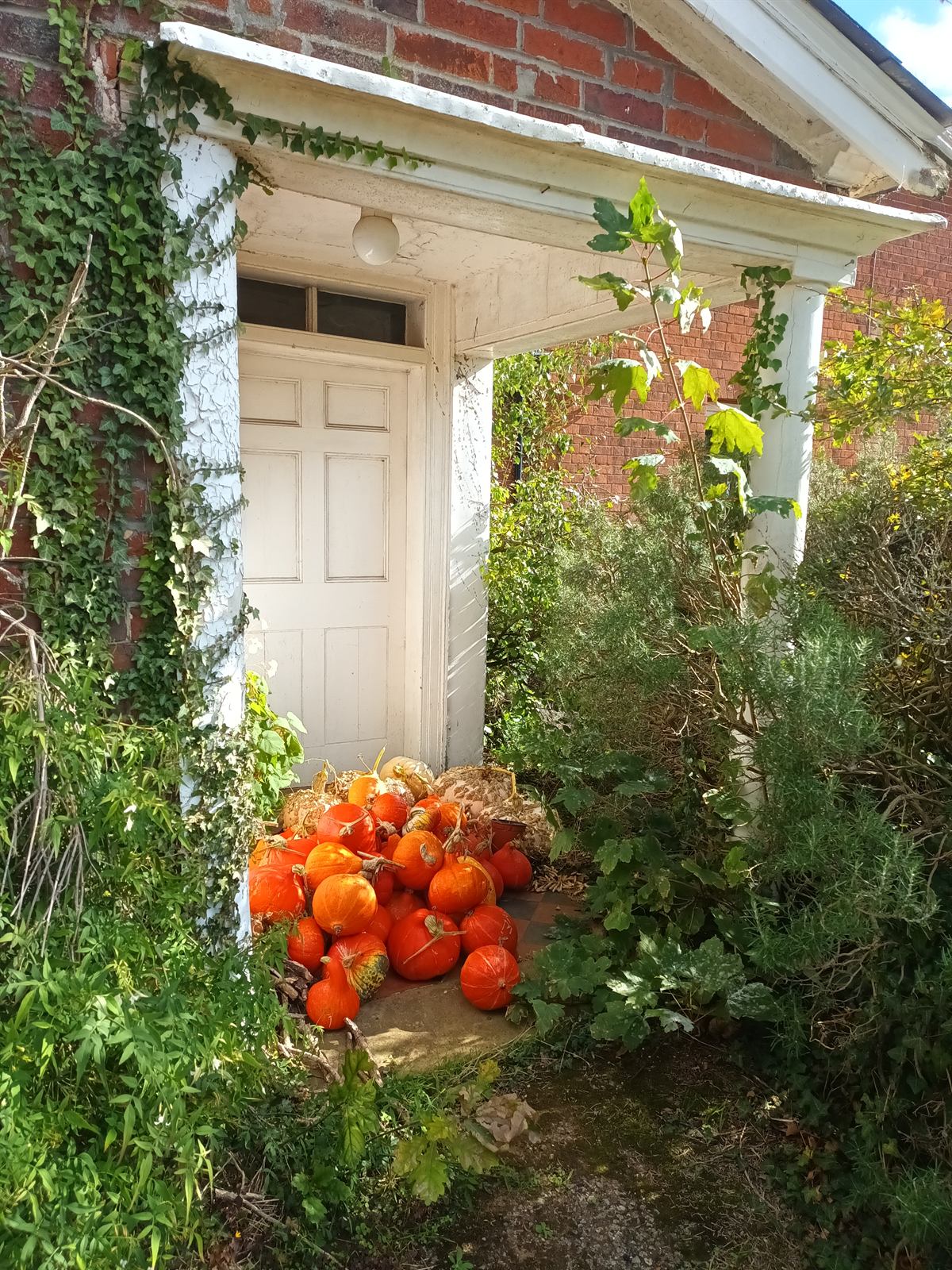
The same porch today. -
1815 to 1840s
Made in Playford: Biddell's implements
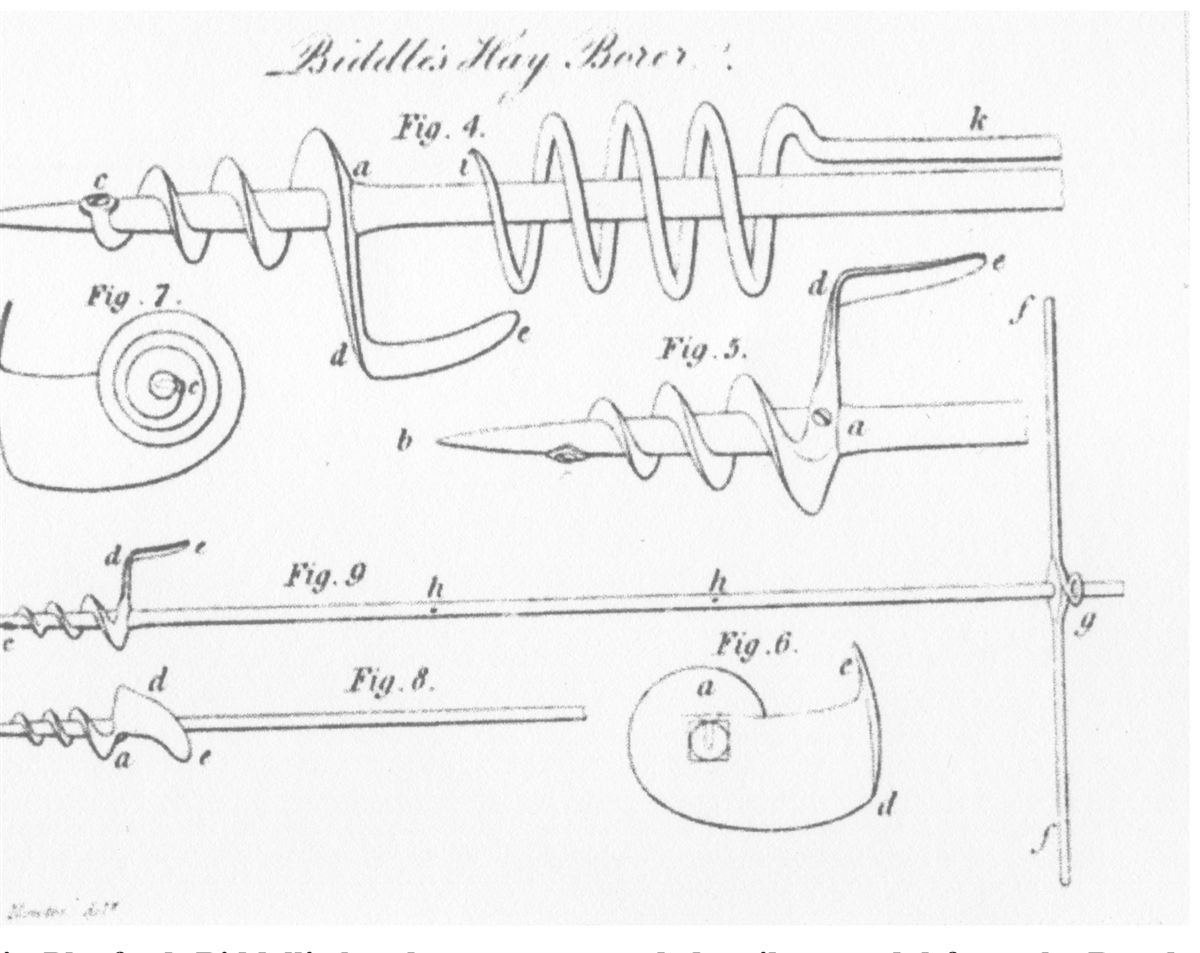
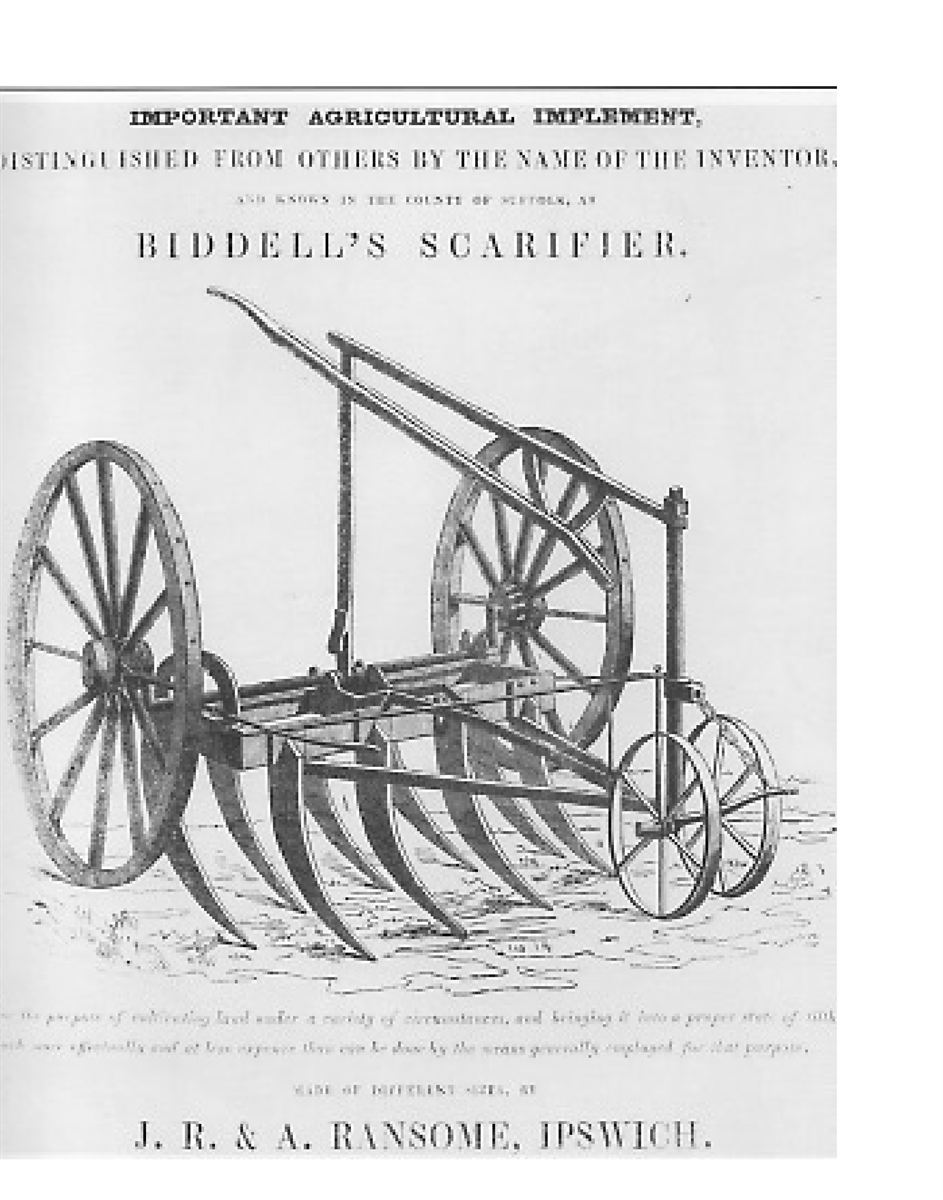
Biddell was an inventive farmer. His hay-borer, a giant corkscrew for letting the heat out of a haystack before it could catch fire, won a silver medal from the Society of Arts in 1822 and was made by William Wright, the village edge-tool maker. In the 1840s his scarifier, an iron-framed implement for breaking up hard ground, became one of the best sellers of Ransomes of Ipswich, the engineering firm founded by his father-in-law. In 1842 two of his sons fed and stoked Ransomes’ first self-propelled steam threshing machine at the Royal Show in Bristol.
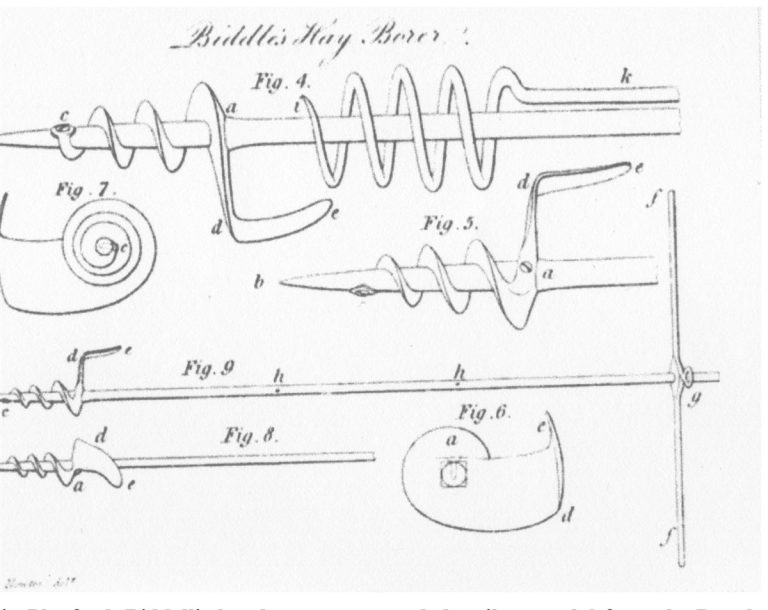
Biddell's hay-borer. Biddell collection 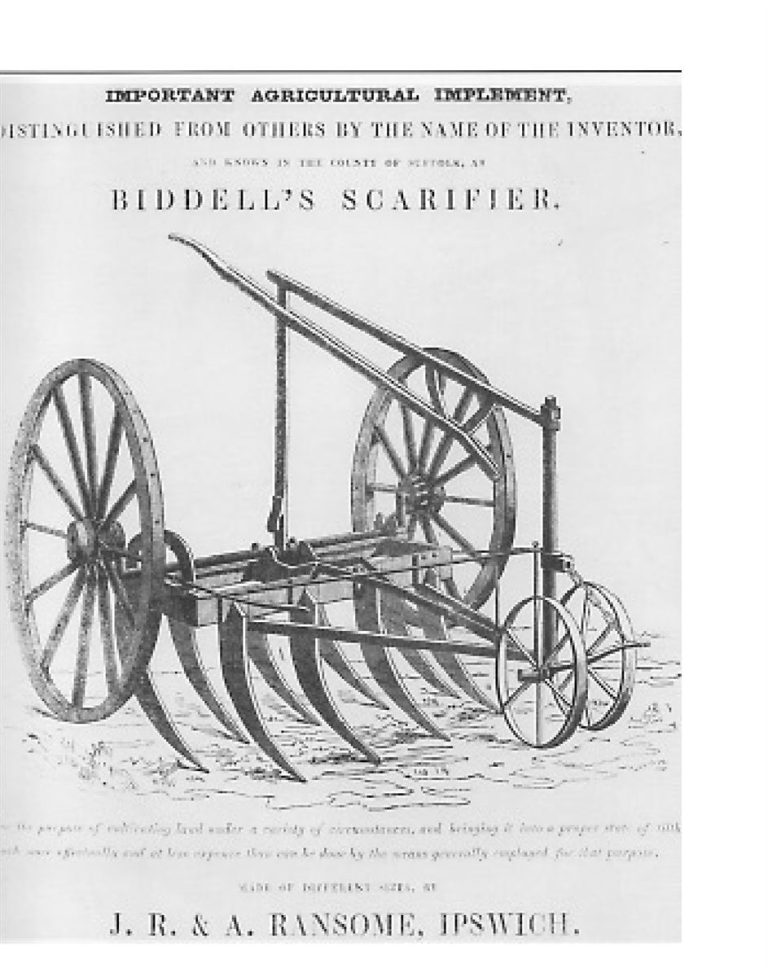
Biddell's scarifier, made by Ransomes. Biddell collection -
1859
The railway cuts the valley
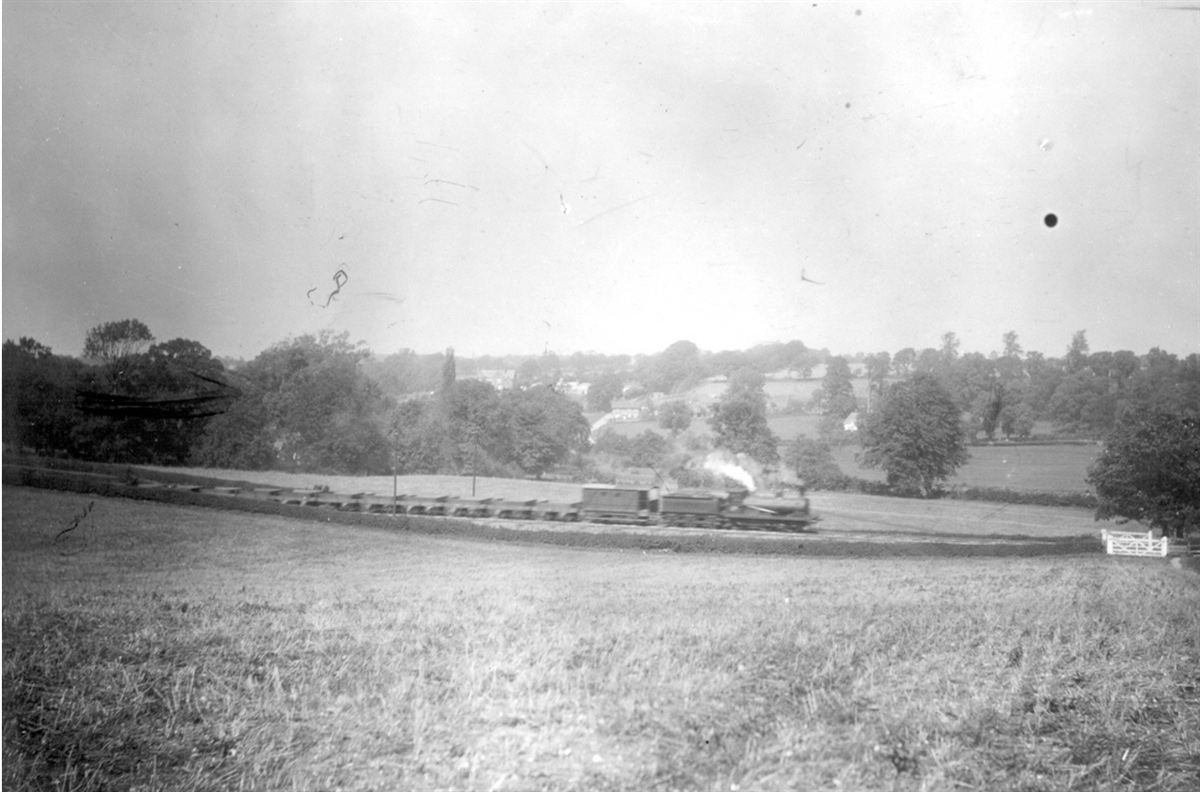
The East Suffolk line opened in June 1859. First planned to follow the river, it was moved halfway up the south side of the valley, slicing through the farmland. Level crossings let carts and stock reach the water meadows, but a bridge built to take hay wagons under the line gave way and was buried in the embankment, where it still lies. Over time the strip between the railway and the river became cut off and little used.
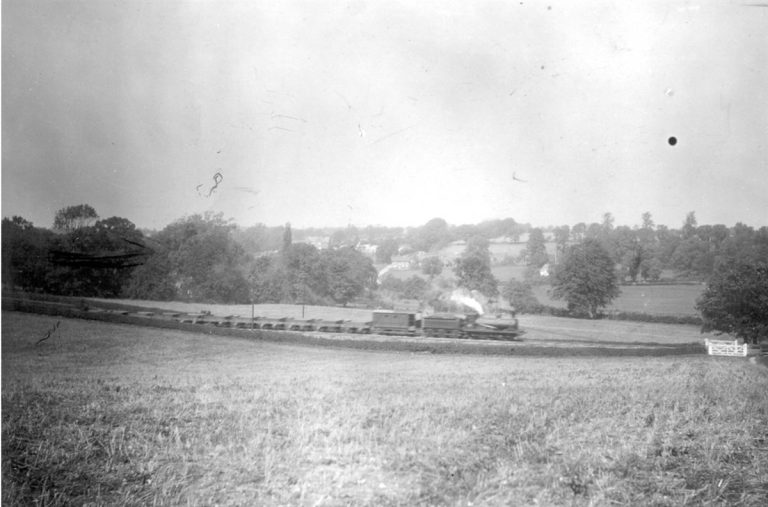
A train at the level crossing below Lux Wood, about 1894. Biddell collection -
1860 to 1892
Red Polls, Suffolk Punches and sheep
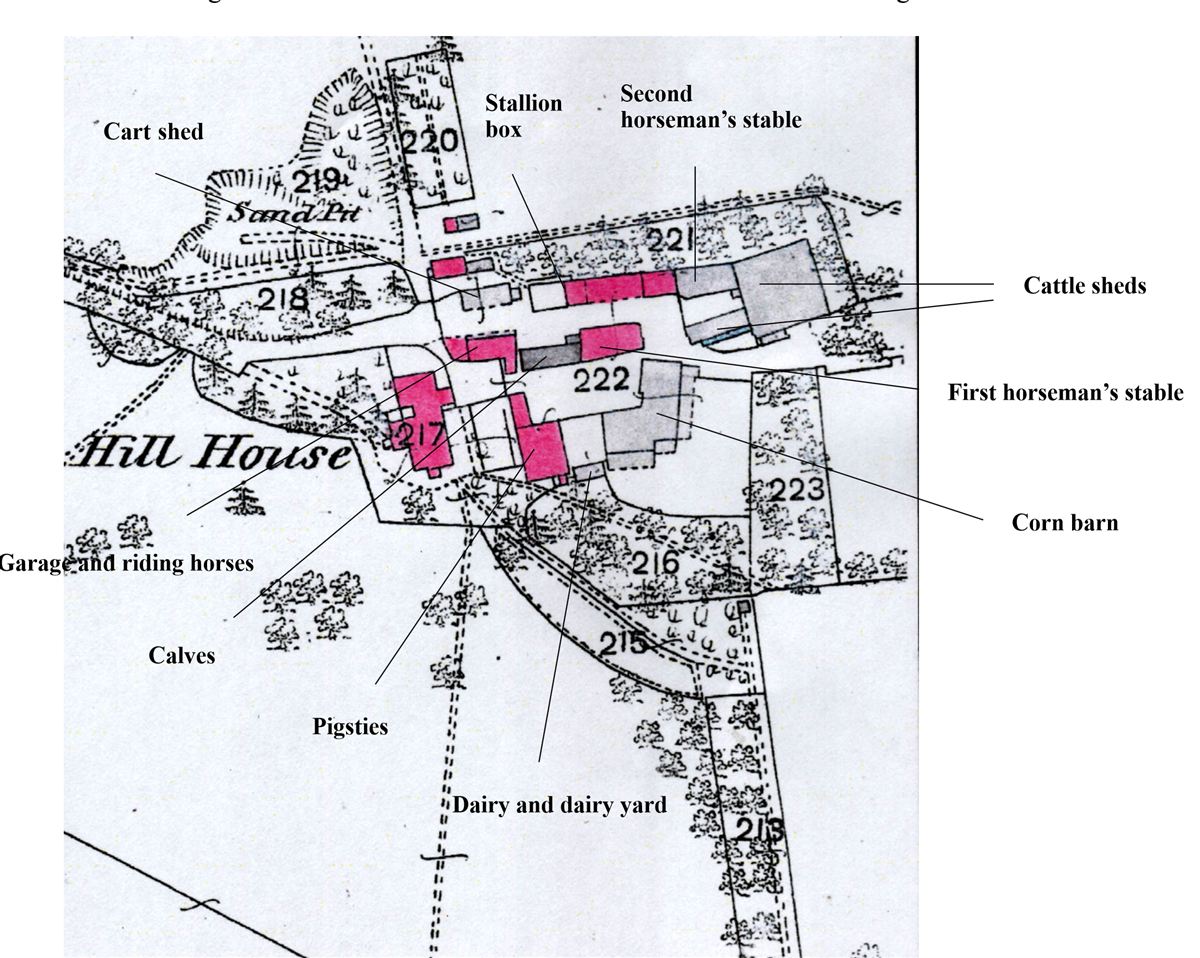
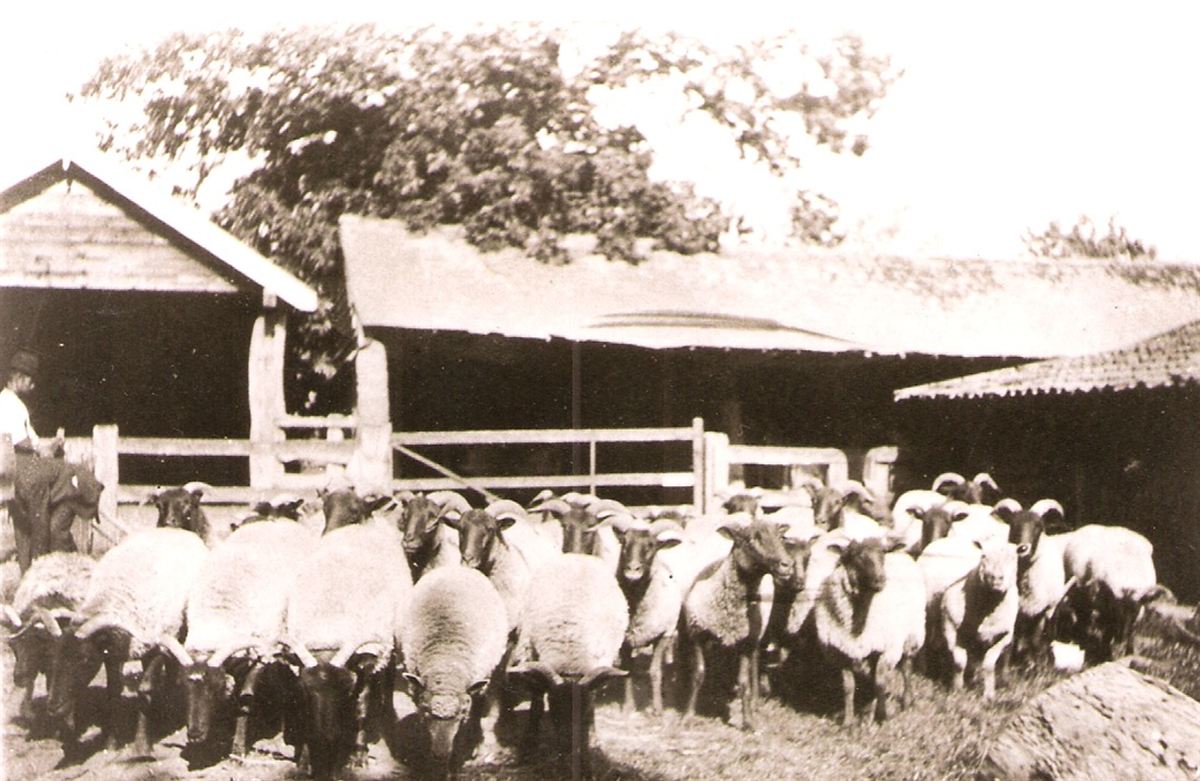
Arthur’s youngest son Herman took over Hill Farm in 1860. Father and son built up a Red Poll herd of up to 100 cows, reckoned the finest in the county, and Herman compiled the first Suffolk Stud Book (1880), which traces Suffolk Punch pedigrees back to 1768. His brother Manfred at Lux Farm bred prize Suffolk horses, kept Southdown and horned Norfolk sheep, the two breeds behind today’s Suffolk sheep, and in 1856 started the Kesgrave Lamb Sales on Playford Heath, which drew more than 5,000 sheep a year. From the late 1860s the Playford Hall land north of the river was added to Hill Farm.
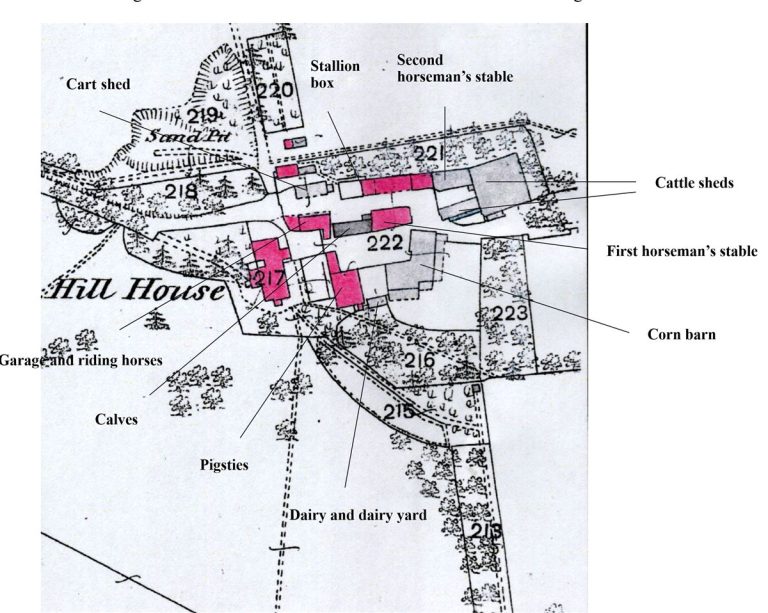
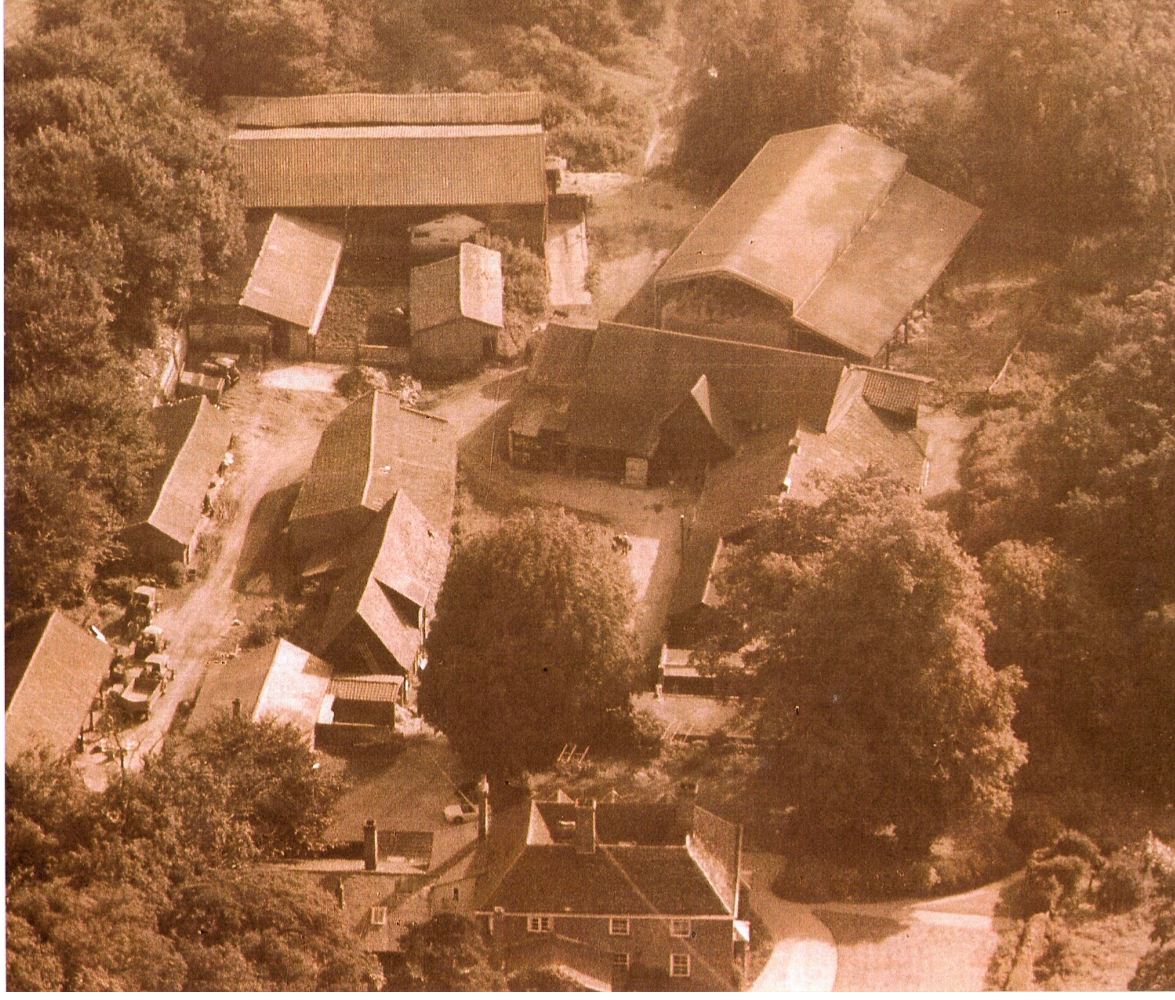
Hill Farm's buildings in the 1880s: dairy, cattle sheds, calf pens, pigsties, a corn barn, a stallion box and two horsemen's stables. From Brian Seward, Hill House, on the Ordnance Survey map 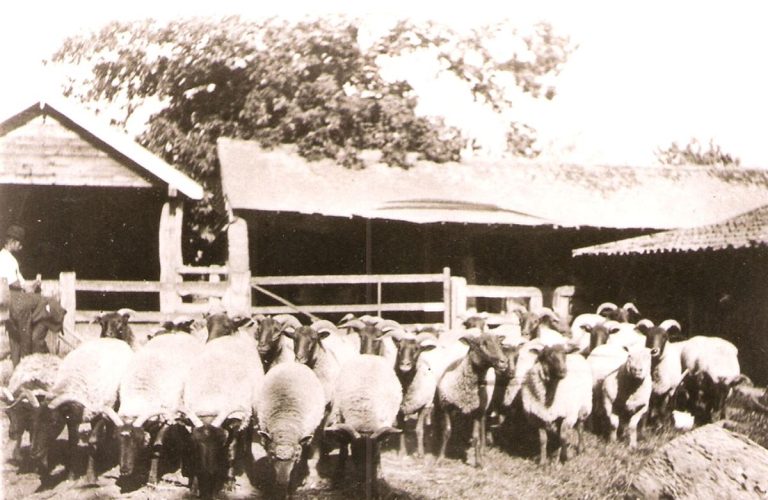
Manfred Biddell's flock of horned Norfolk sheep. Biddell collection -
1870s to 1890s
Hard times on the land
From the 1870s cheap grain from the American prairies, carried by steamship, flooded into Britain. Wheat fell from about 59 shillings a quarter in 1873 to under 23 shillings by 1894, and much of the poorer heathland around the parish went back to sheepwalk. Herman Biddell gave up the farm in 1892 after 84 years of Biddells at Hill House.
-
-
Horses to tractors 1896 to 1946
-
1896 to 1946
George Fiske: milk, beet and horses
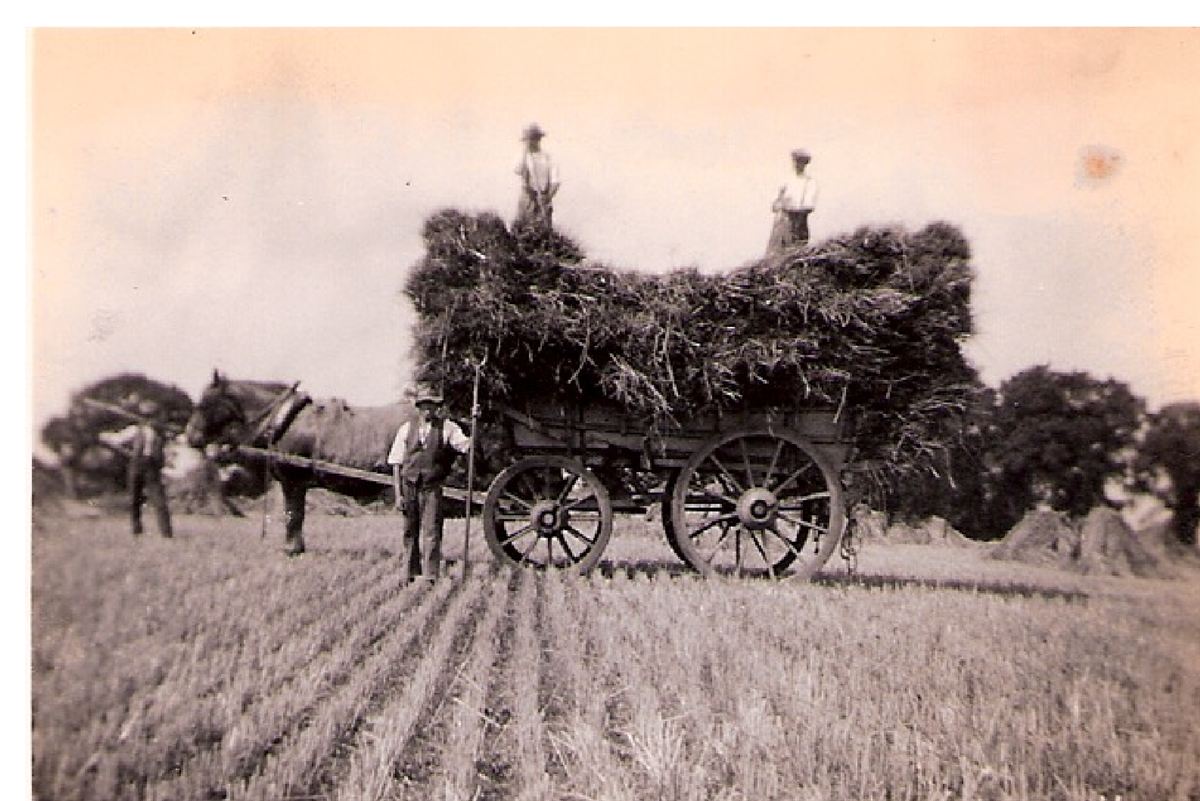
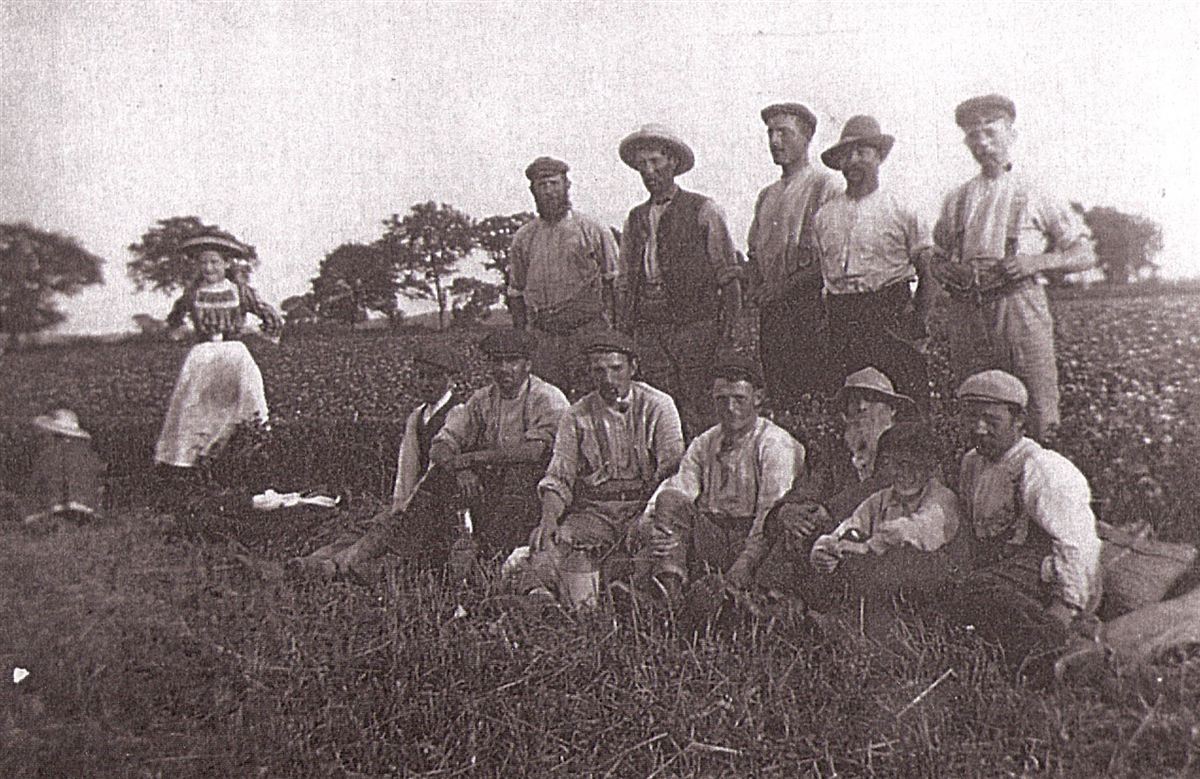
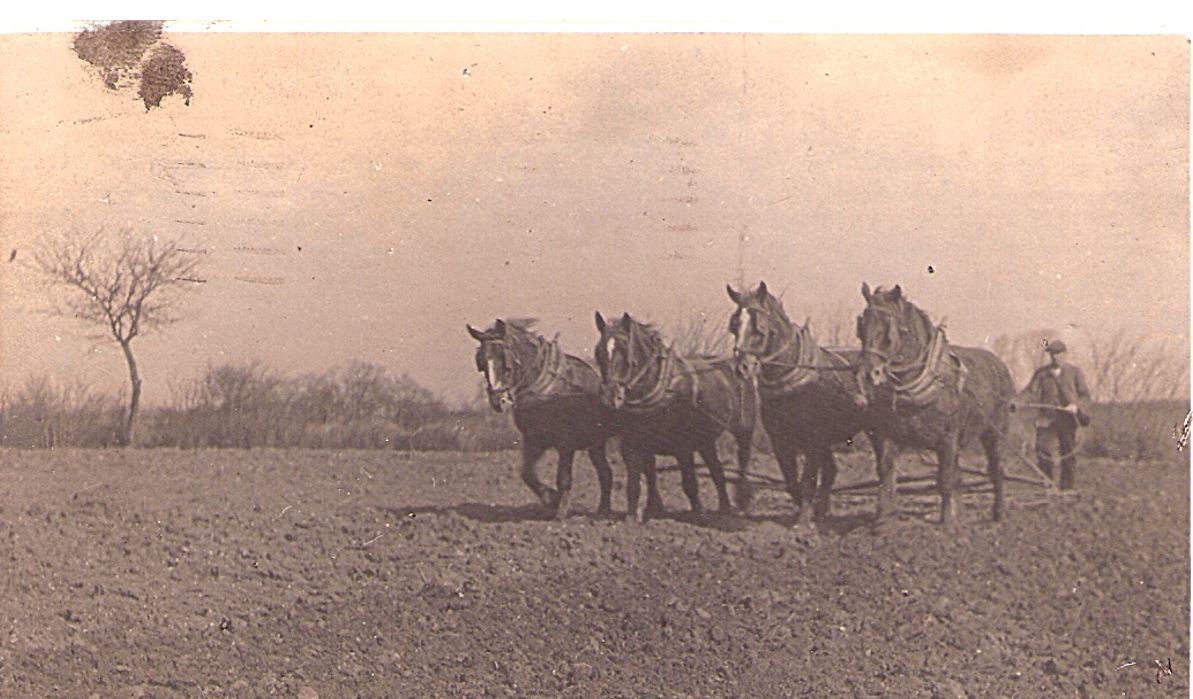
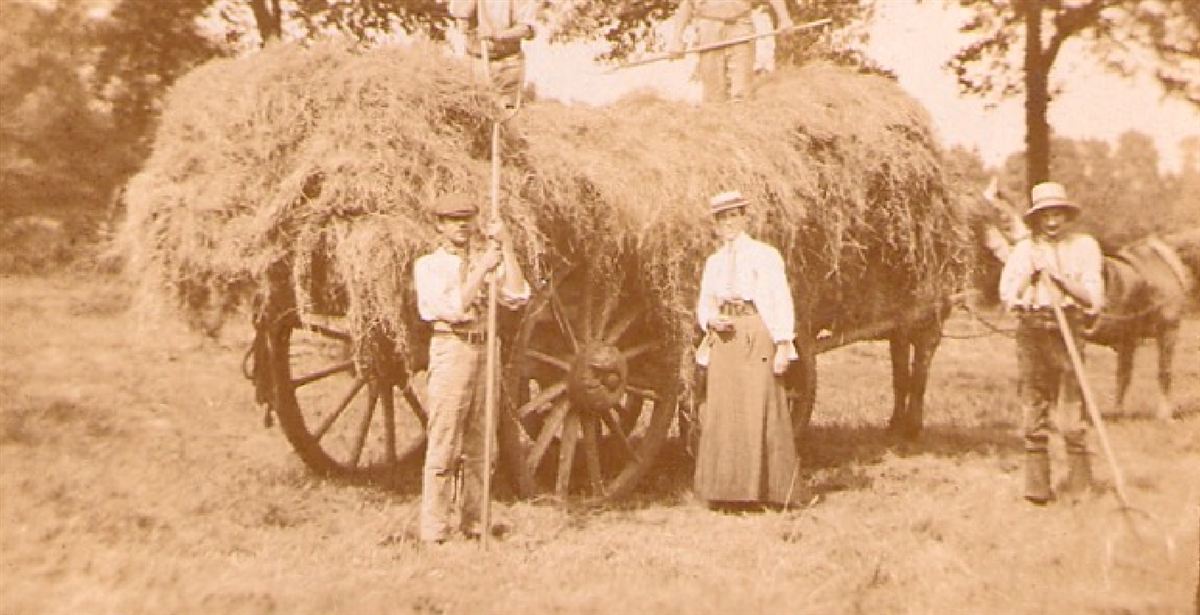
George Fiske, from a Bramford farming family, farmed Hill Farm for fifty years. Through the lean 1920s and 1930s a herd of about 30 cows, still milked by hand, supplied fresh milk to Ipswich, alongside beef cattle, around 30 sows, poultry and an orchard by the church. Sugar beet, grown with a government subsidy from 1924, went by rail from Bealings to the new Ipswich factory. Eighteen working horses and about fourteen men worked the farm, much as in Herman Biddell’s day, while the heaviest clay fields were left to scrub.
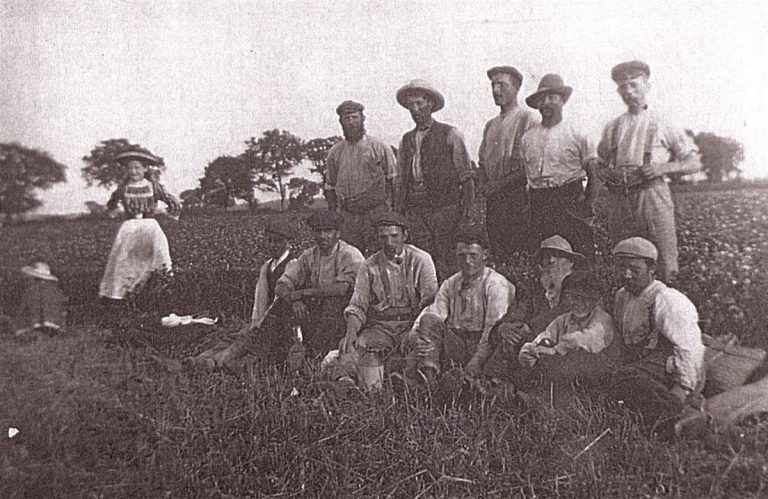
Harvesters on Common Field, 1908. Margaret Goldsmith 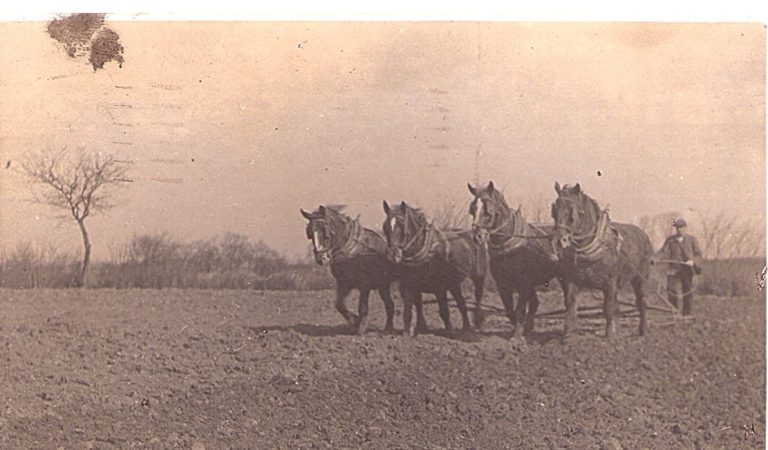
Harrowing with four horses, 1930s. Margaret Goldsmith 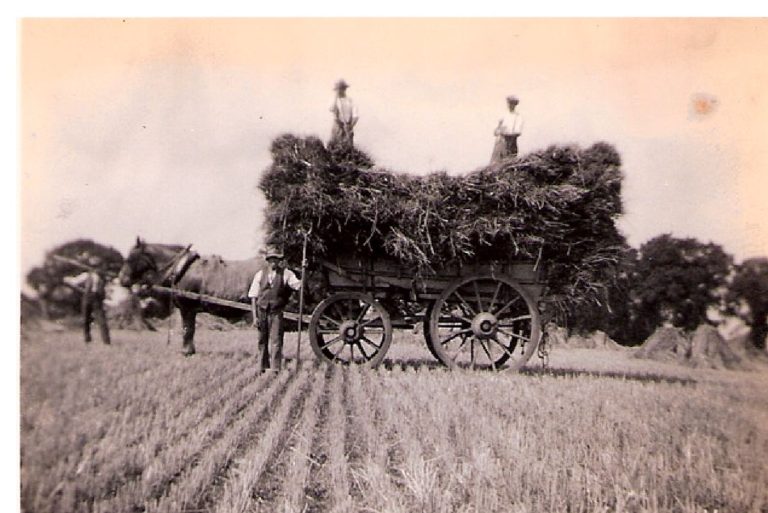
Harvest on Common Field, 1930. Frank Mann 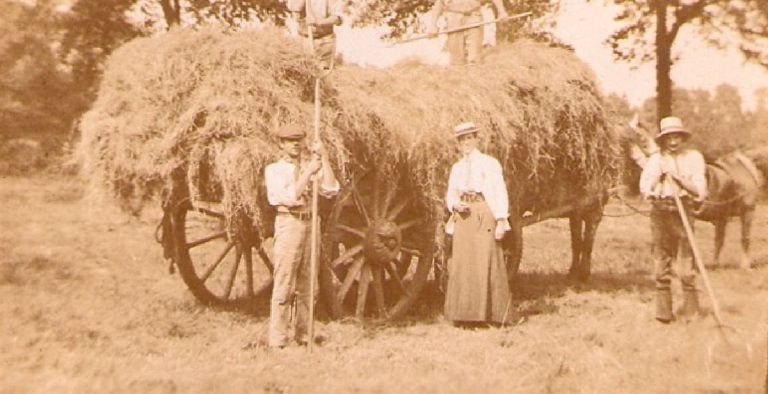
Haymaking on Bridge Meadow, 1930s. Frank Mann -
1914 to 1945
Two world wars
In both wars the farm lost young men and horses and was asked to grow more food. By 1939 Fiske’s team was elderly, with his horsemen in their sixties. The farm’s first tractor, a Fordson, arrived early in the Second World War, grassland was ploughed for grain, and later German prisoners of war came over daily from Debach to help.
-
-
The modern farm 1946 to 2017
-
1946
Charles Lofts and the new farming
Charles Lofts was 21 when he took the 385-acre tenancy in 1946, with no money behind him and boundless energy. The first fields were cut by combine harvester in 1947, the last horses had gone by 1949, and an Ayrshire, later Friesian, dairy herd grew to 83 cows. When the Bristol estate was sold after the 4th Marquess died in 1951, he bought the farm, with Hill House and 16 cottages, in 1953. Buying the land between the railway and the river in 1959 let him irrigate crops from the Fynn.
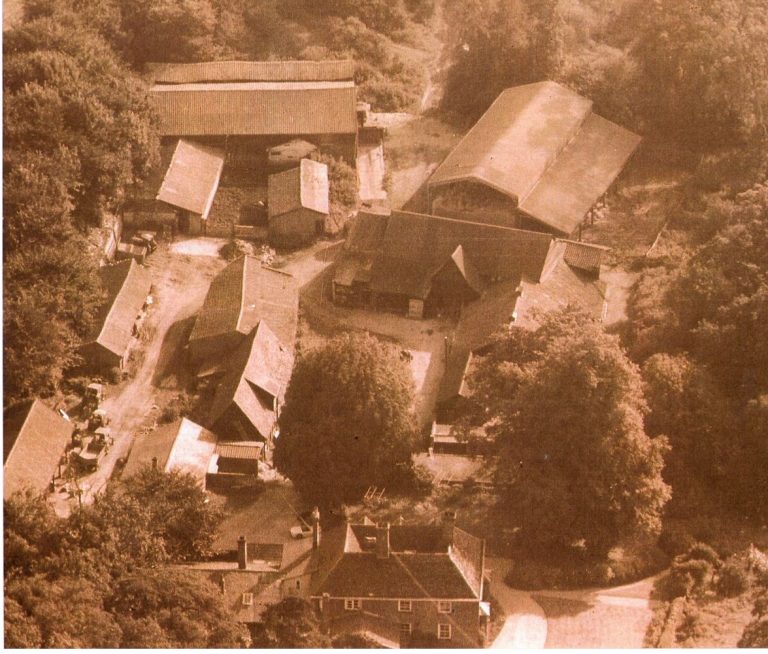
The farm buildings behind Hill House in the 1950s. C. D. Lofts -
1955 to 1990s
Hedges out, ploughs in
The post-war drive for production changed the landscape. By 1955 nearly all the farm’s hedges had gone and scores of old oaks were felled. In 1964 the dairy herd gave way to suckler cows on the water meadows, and after Britain joined the Common Market in 1973 almost every meadow in the parish was ploughed for crops. The water meadows still part of Hill Farm seem largely to have escaped: aerial photographs show them under grass in 1945 and again in 2000, and long-term residents don’t recall them being ploughed in the last 60 years. A blurry image from 1985 hints that part may briefly have grown crops, and they may have been ploughed during or just after the war. Set-aside in the 1990s began to put some of the parish’s arable land back to grass.
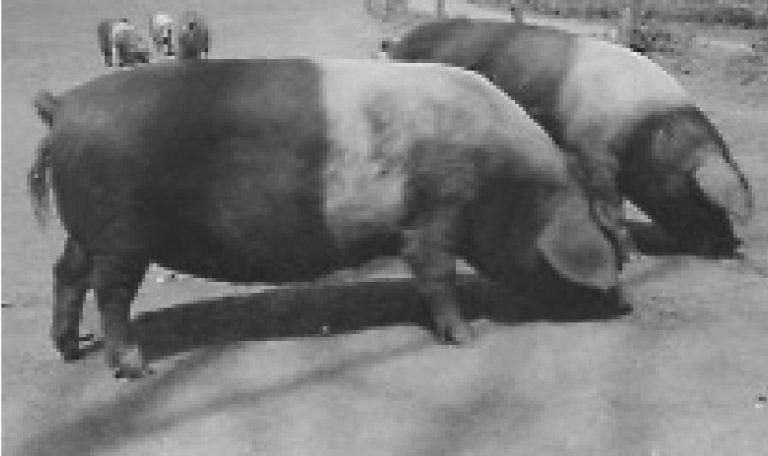
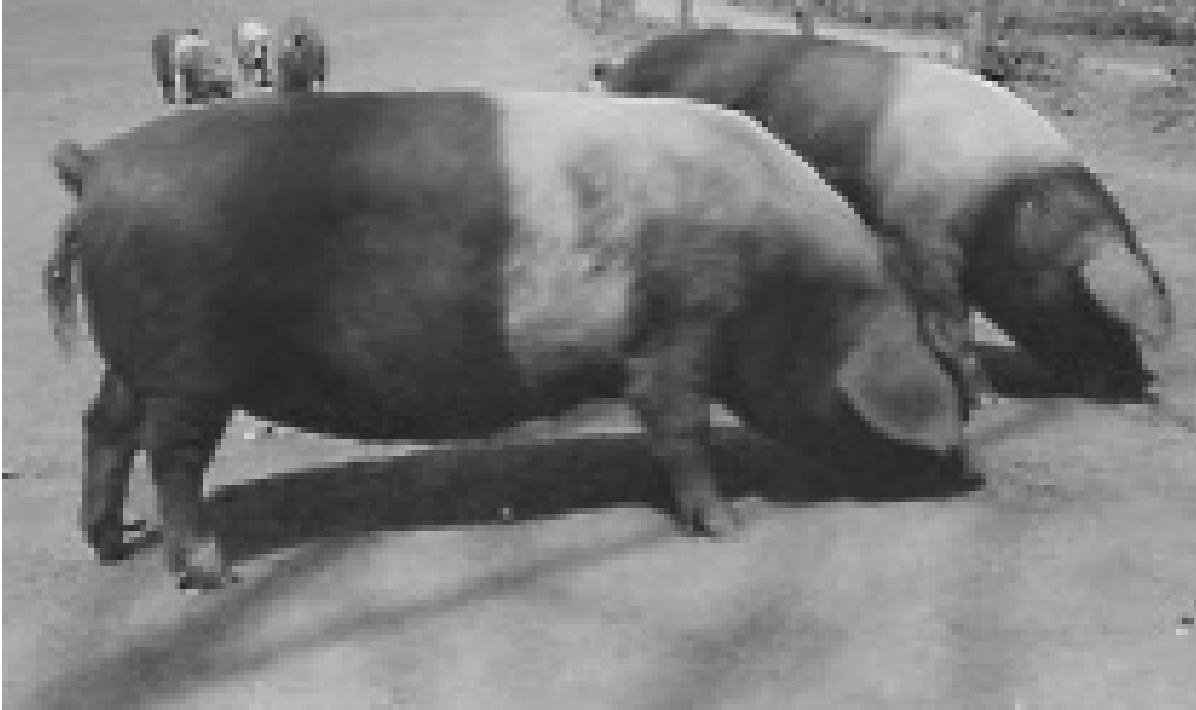
Essex pigs on Spring Meadow, 1966. Basil Dunnett -
1995 to 2017
Grass and wetland
When Charles Lofts retired in 1995 he sold the arable land and kept 119 acres around the house, mostly long-standing grass on the valley floor. He extended The Mere for wildlife; it is now recognised for its ecological significance as a County Wildlife Site. He died at Hill House in 2017, aged 91, after 70 years there.
-
-
Today and tomorrow 2020 onwards
-
Today
Hill Farm today
Hill Farm is now an 80-acre agroecological project in the Fynn Valley and home to several enterprises: a market garden, dye flowers, a grazing beef herd, honeybees, small-batch preserves and ecological monitoring. Cattle graze the valley meadows again, and bees forage where Domesday Book recorded beehives more than nine centuries ago.
-
2023
A new ford for a cleaner river
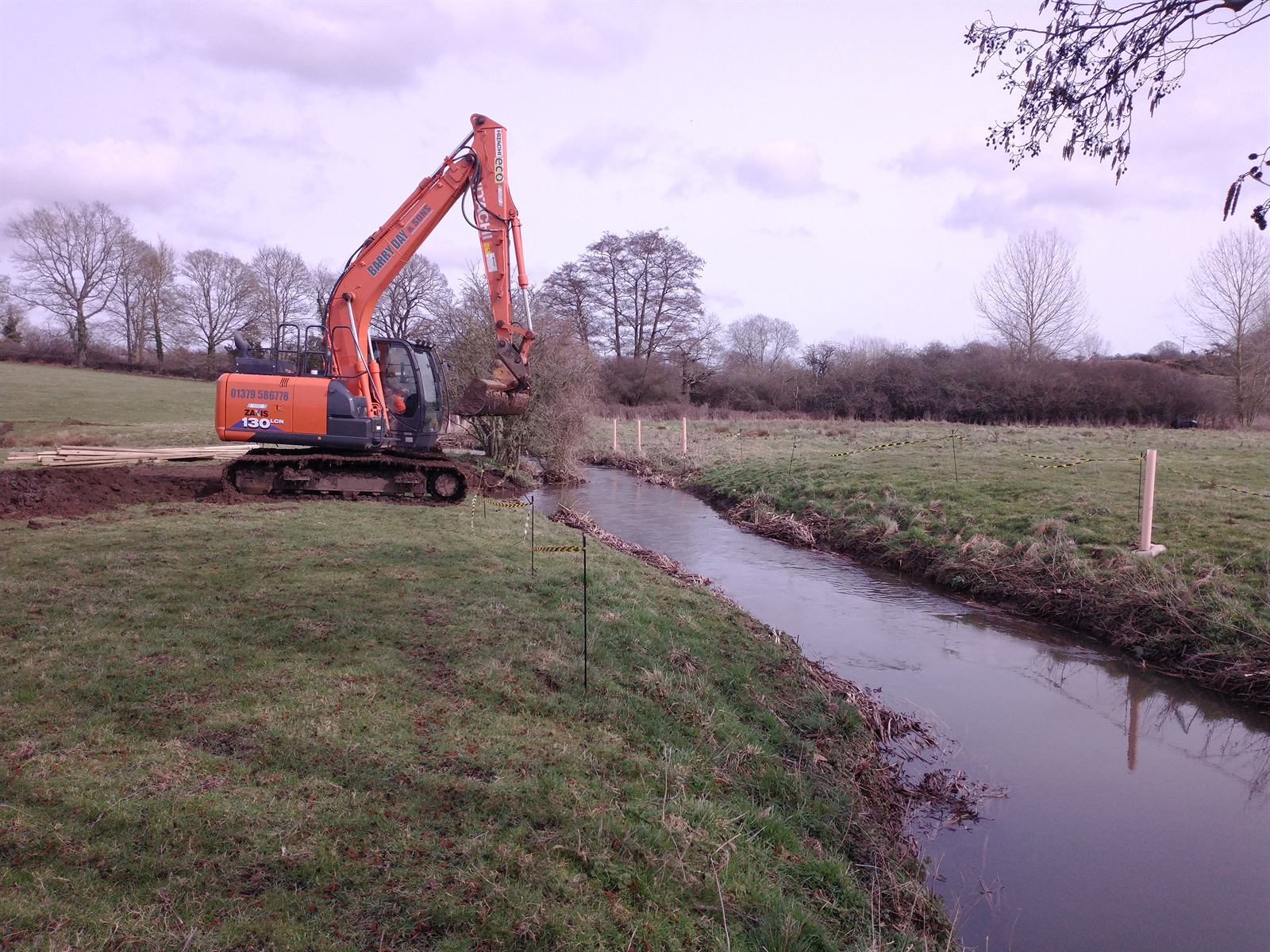
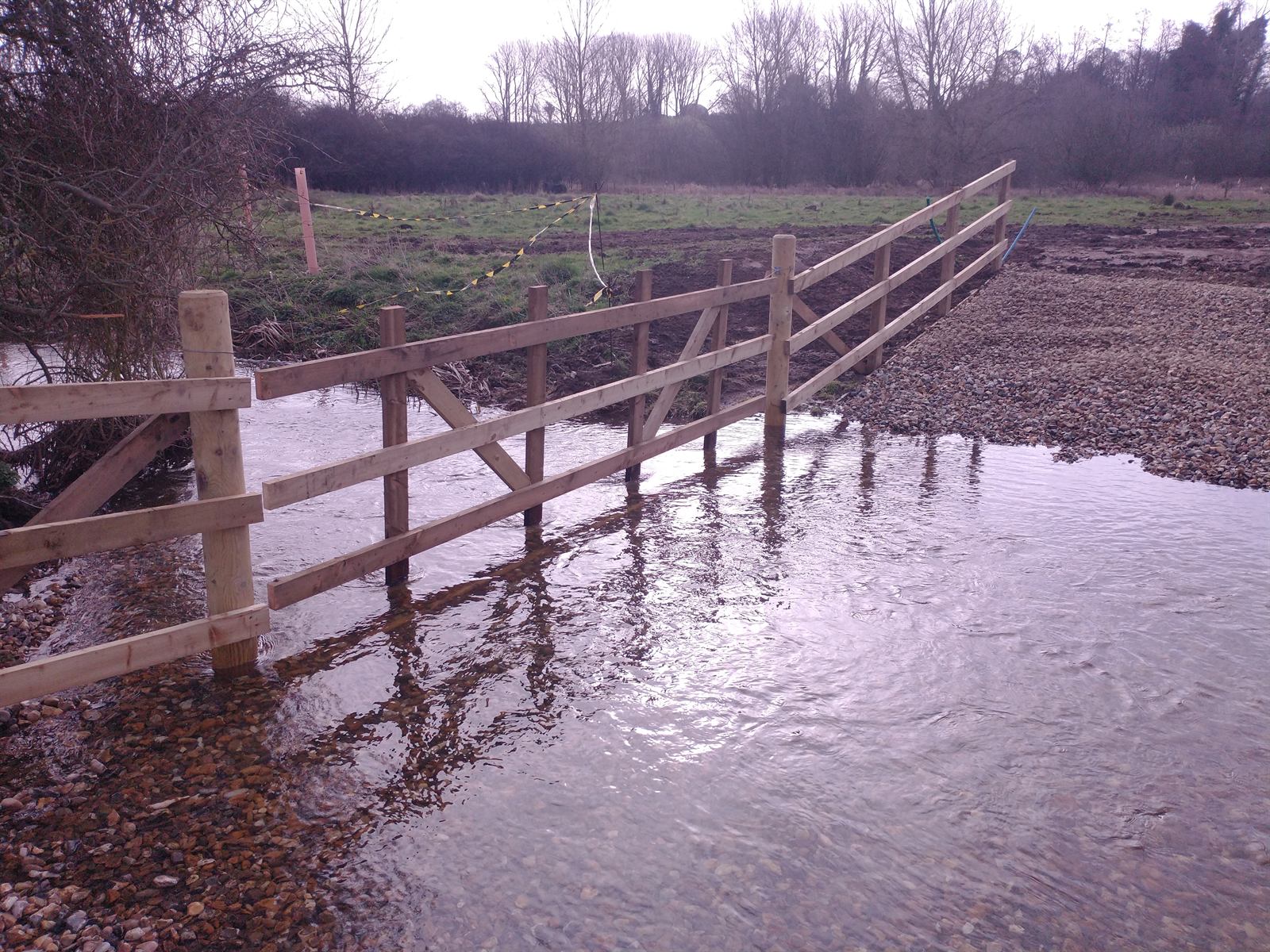
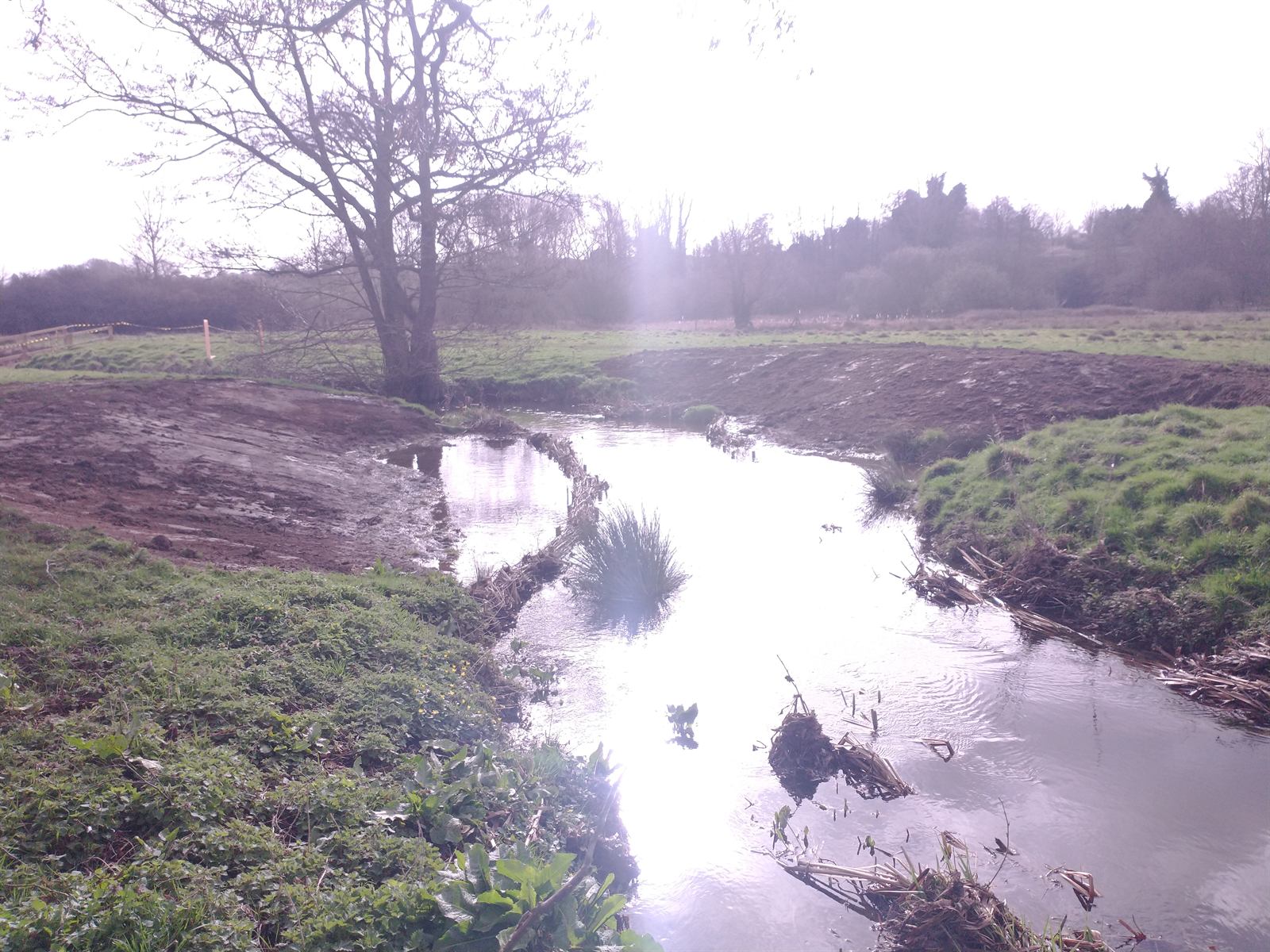
Working with the Essex & Suffolk Rivers Trust, we built a ford so that our cattle cross the River Fynn in one place. The old, eroded crossing point was restored with willow revetments, giving a faster-flowing main channel beside shallow, still water for wildlife. The ford reduces the sediment and nutrients washing into the river, and the old crossing has since grown back well.
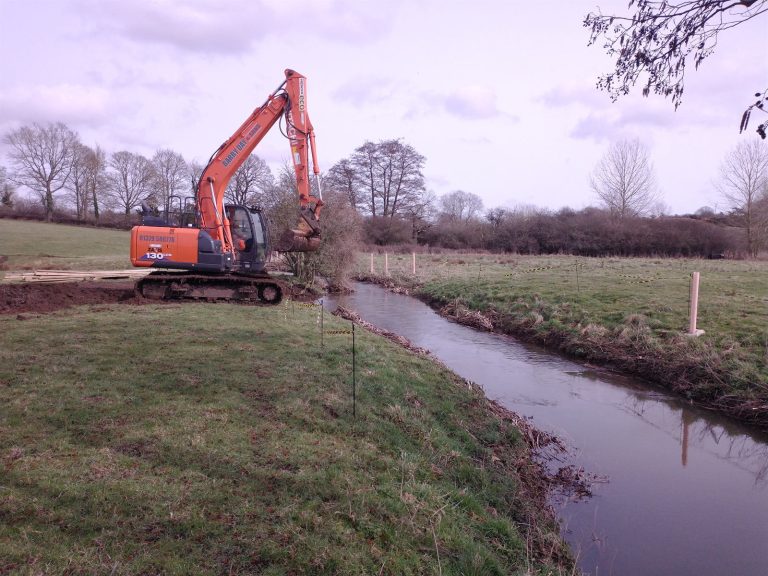
Building the ford, March 2023. 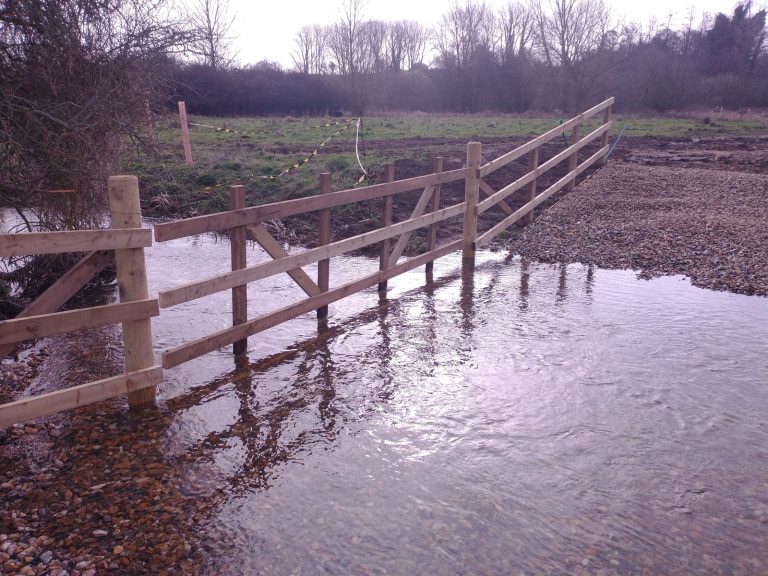
The new ford and fencing, March 2023. 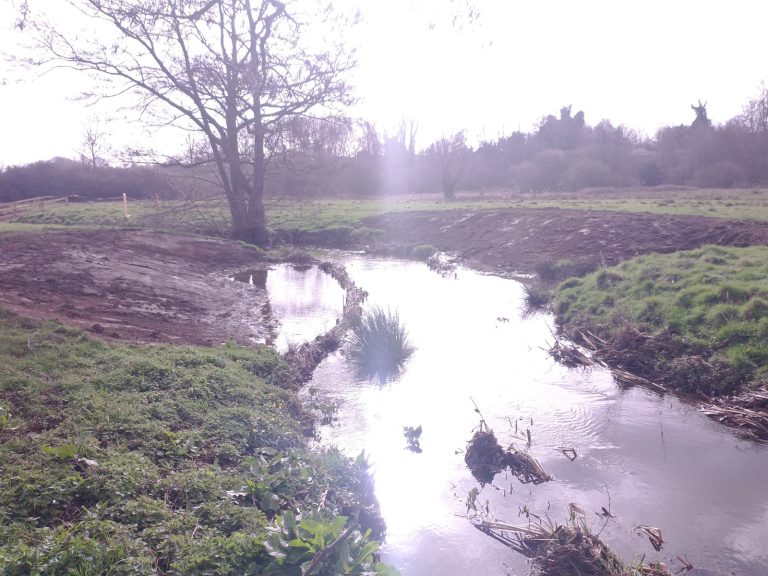
The old crossing just after the works, March 2023: bare banks and new willow revetments. 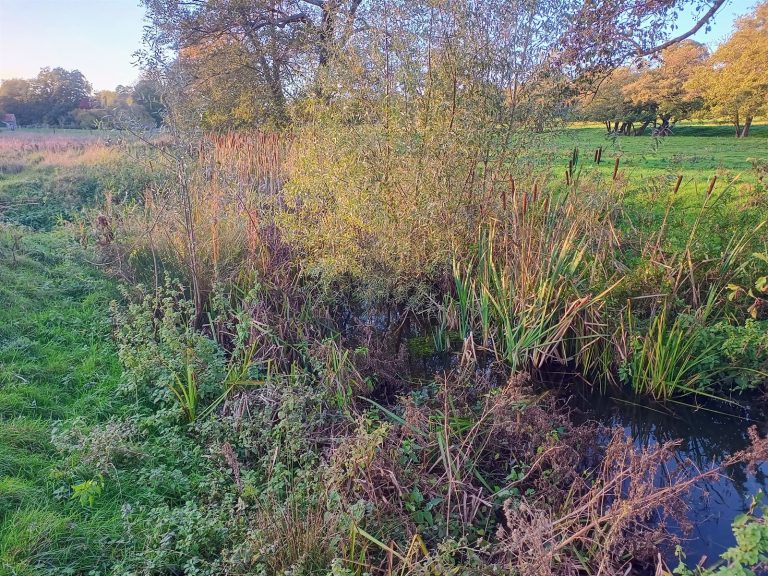
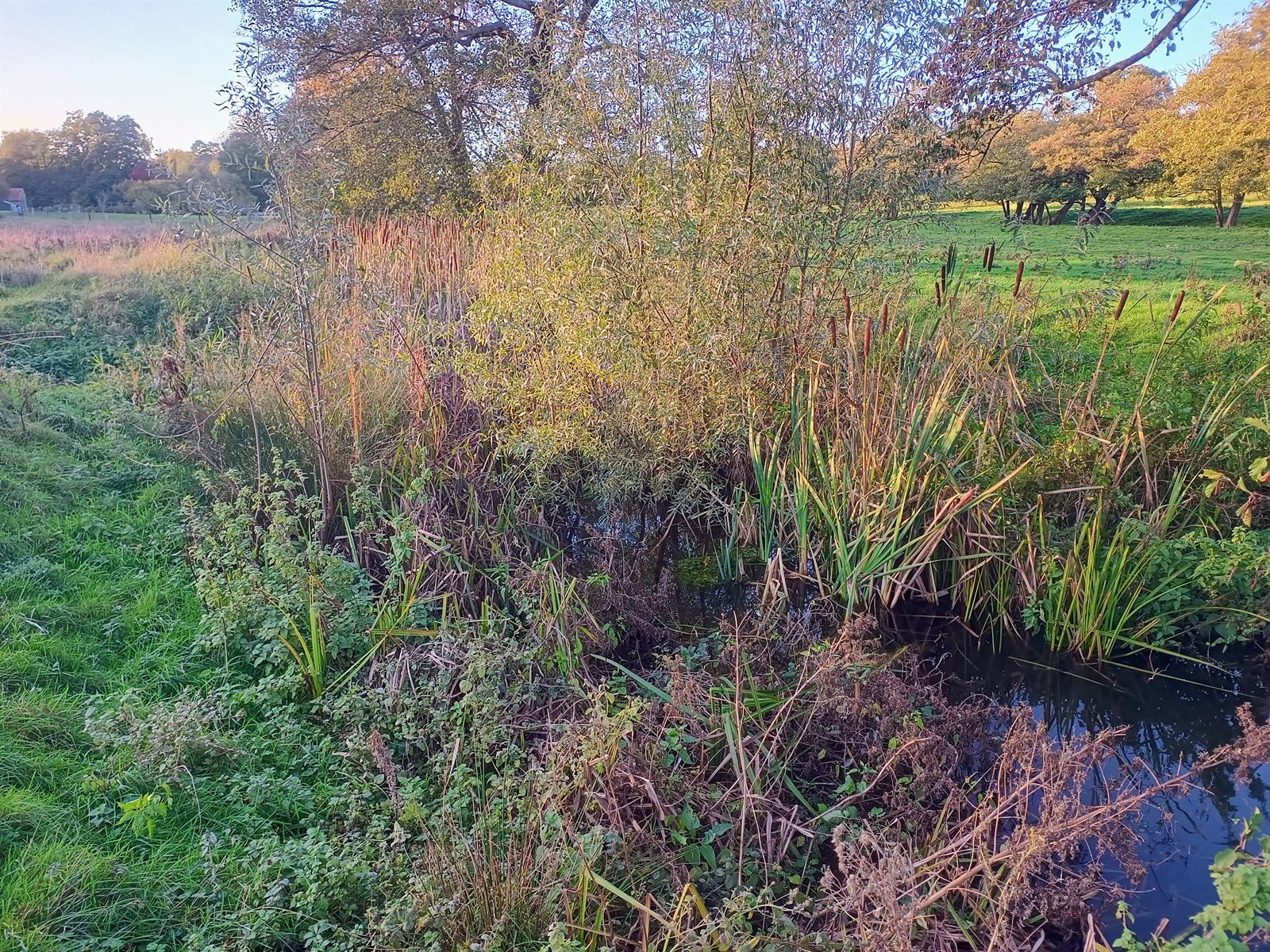
The same spot in October 2026, grown over with willow, reedmace and wetland plants. -
Next
The next chapter
Every generation has farmed this land in the way its times demanded, and each left its mark on the maps. Ours will be no different, so we intend to record it. This map will gain layers showing what we measure today, such as vegetation surveys, soil health and the birdsong picked up by our sound recorders, so that people in future can see how the land changed while it was in our care.
-
Help us tell the story
Do you remember working on Hill Farm, or have photographs, documents or finds connected with it? We would love to hear from you, and to add your memories to this page with your permission. Please get in touch.
Sources and credits
- Brian Seward, Hill House, Playford Hall and Playford Church: a history, in the Playford village history series, Playford Parish Council. Historic photographs are credited to the collections he named: the Biddell collection, Margaret Goldsmith, Frank Mann, C. D. Lofts and Basil Dunnett. If you hold the rights to any of them and would like the credit changed or the picture removed, please contact us.
- Historic maps: Ordnance Survey six-inch (1881), 25-inch (about 1904) and 1:25,000 (1950s) maps of Suffolk, reproduced courtesy of the National Library of Scotland under a Creative Commons Attribution (CC-BY) licence. Today’s map: © OpenStreetMap contributors. All map images are served from this website.
- Archaeological records: Suffolk Heritage Explorer (Suffolk Historic Environment Record), including the seax found near the old ford (record BEL 065) and the Mesolithic axe from Playford Heath (PLY 049).
- The Biddell family papers, including Arthur Biddell’s day books, are held by Suffolk Archives in Ipswich (reference HA2).